

Hi there. If you are reading this you may have just been granted the National Disability Insurance Scheme, if that is the case, congratulations because it can change your life the way it changed mine.
You may also be on the NDIS already and are looking to change providers, let me say you have landed in the right place. Before I tell you about my experiences with One Good* Day in the last four years, I feel compelled to tell you my story up until now to give you some context.
My Diagnosis and Early Signs
At the age of twenty nine, nineteen years ago, I was diagnosed with bipolar disorder after two major psychotic episodes in 2005 and 2007. However, my story predates these episodes. It goes way back into childhood.
Paranoia was prevalent as young as eight when I felt paralysed by the supposed judgement of others, an element of my mental illness that has carried on until today.
Furthermore, my mother had severe complex post traumatic stress disorder with acute anxiety and depression. Therefore, I was very aware later in my teenage years, when I began to have depression, that if I was not proactive in my personal growth I could also succumb to mental illness.
However, all the self help books in the world could not have prepared me for what was going to be my journey with bipolar that has played out.
Living Through Episodes
I have had overall ten major psychotic episodes lasting up to four months at a time, each resulting in hospitalisations and involuntary treatment authorities. What begins as an elevated state can soon become a manic relapse whereby psychotic symptoms, such as auditory hallucinations and delusions of grandeur transpire.
In general, I can basically expect to have an episode every couple of years based upon the overall frequency. And out of these past nineteen years, I have spent, all up, three years and four months in this traumatic state, which is why my life centres around staying well.
The Day to Day Reality
On a day to day basis I can expect fluctuating moods of depression to elevation and socially I cannot do group situations because of paranoia. When I say group, I mean any more than two people at a time. It is these psychosocial barriers that are disabling.
With great effort, there’s not a day that passes that I am not monitoring my moods and managing my mental health with the recommended regime of medication, good sleep, diet and exercise, therapy and avoidance of drugs and alcohol misuse.
Support Before the NDIS
Over the years, before becoming a NDIS participant, I had amazing psychiatrists, one in particular was Doctor Francis Dark, and case managers in the public health system as an outpatient in the community. Case manager, Karen stayed with me for a whole two years whilst I was living on the Sunshine Coast, navigating many trials and challenges.
However, upon her retirement, she was replaced with Carys. At the time I had just come out of hospital from my seventh psychotic episode. It was Carys that believed that I should be granted the benefits of the NDIS and to whom I am so grateful. After months of her filling in the application I was finally awarded the NDIS at the end 2021.
Finding One Good* Day
In the beginning of 2022, I moved back to Brisbane from the Sunshine Coast where I chose the registered NDIS provider, One Good* Day in Brisbane to work with. In that time, I have had incredible Recovery Coaches. My current one, Bree, has been with me for two years.
She has religiously turned up every fortnight to my place to support me in all manner of things, but mostly to be my champion with the struggles that accompany living with bipolar disorder. I have nothing but great things to say about this company and her.
They have guided me and shone a light on my strengths. They have educated me on what it means to be a person with a disability and endure psychosocial barriers. And they have encouraged me to choose a life that works and suits me best with my condition.
What Has Changed
The bipolar has not changed. In fact, I have had to endure three more psychotic episodes since I have been with One Good* Day. But what has changed is the quality of my life. The supports I have received have given me, amongst other things, the voice and empowerment to take up my art practice once again after a ten year hiatus.
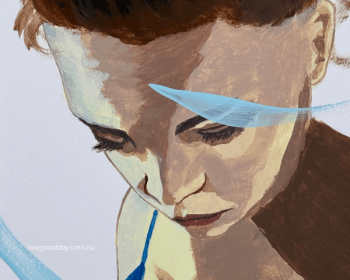
Having studied a Bachelor of Visual Art with Honours and a Masters in Visual Art in my early years and then going onto exhibiting afterwards, to return to my passion again feels like I am coming home to myself.
I no longer feel that I am my diagnosis. I am many other things. It is Bree, from One Good* Day, that has been reminding me of this.
A Return to Creativity
With this newly found confidence I decided months ago to apply to Access Arts SAFE grant. Access Arts is Queensland’s leading organisation creating opportunities in the performing and visual arts for people with disability or disadvantage. And guess what, I got it. After receiving the news, I called all my support workers and told them the news to which they were all ecstatic.
I am very humbled to be a participant of the NDIS and so grateful to have the provider I do of One Good* Day.
I can earnestly say, without each of them, I would not be where I am today.
You Are Not Alone with OG*D
We understand that not every day is the same when you’re experiencing a mental health condition. Some days are good days, others aren’t. But you don’t have to go through it on your own.
If, like Megan, you have NDIS funding for Recovery Coaching, or you think you may be eligible for psychosocial support through the NDIS, we’re here to support you.
Reach out to One Good* Day to learn more about Recovery Coaching and take the next step, at your own pace.

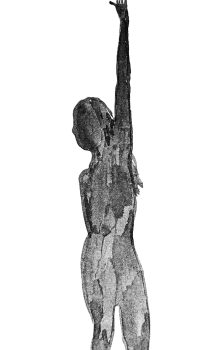
*Images in this blog post are artworks of Megan’s.